sponsored by


News
Business Wire
Press Releases
Economy
Business Life
Opinion
Legal Center
Classifieds
Executive Calendar
Networking Calendar
Events
Subscribe
Archives
Get on the list
Contact Us
Links
Media Kit
Home

SPONSORED LINKS
Monday, July 26, 2010

Green's monstrous growth

Local businesses pursue green-related cost-savings measures


STORY BY TONY ILLIA

Green, the catchall ecoconscious term, increasingly means greenbacks for businesses. Companies are eagerly climbing aboard the sustainablity bandwagon, as record unemployment, sluggish job growth and frozen credit markets sap business. Yet, hope remains high for a green economy based on environmental lifestyle products and practices that focus on reducing waste and conserving natural resources. Green building is already a mainstream part of architectural design and construction.

"The green building market has basically tripled for the last two years, which is a good sign that it's flourishing," said Rick Van Diepen, 2010 president of the Nevada chapter of the U.S. Green Building Council. "Developers and owners are seeing the value in green building as a competitive differentiator. The bottom-line decisions are becoming paramount in terms of lowering operating costs."

BILL HUGHES | LAS VEGAS BUSINESS PRESS
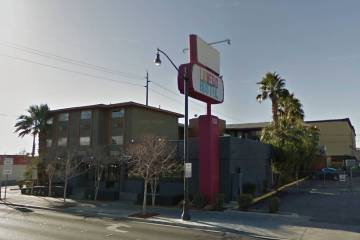
MGM Resorts International's LEED-certified complex sets the bar for green building.

BILL HUGHES | LAS VEGAS BUSINESS PRESS

Thomas Piechota, director of sustainability and multidisciplinary research at UNLV.

BILL HUGHES | LAS VEGAS BUSINESS PRESS

Symphony Park, a mixed-use, master-planned complex constructed to LEED standards.

BILL HUGHES | LAS VEGAS BUSINESS PRESS

MGM Resorts International's CityCenter is the world's largest gold LEED community.

BILL HUGHES | LAS VEGAS BUSINESS PRESS
Bob Coyle, vice president of government affairs for Republic Services.

BILL HUGHES | LAS VEGAS BUSINESS PRESS
The Teacher Exchange initiative collects donated items for teacher use in public schools.

BILL HUGHES | LAS VEGAS BUSINESS PRESS
Greg DeSart, president of Geotechnical & Environmental Services Inc.

BILL HUGHES | LAS VEGAS BUSINESS PRESS
Lisa Ortega, president of the Nevada Shade Tree Council, a nonprofit advisory group.

BILL HUGHES | LAS VEGAS BUSINESS PRESS
Scott Stolberg, president and chief executive officer, AAEQ Manufacturers and Recyclers.

U.S. buildings generate 39 percent of carbon-dioxide emissions, consume 40 percent of energy, and use 13 percent of all water each year, the council reports. Innovation and improved efficiency can dramatically improve energy consumption and conservation. Green buildings, on average, use 40 percent less water and 30 percent less energy, the council said; they also reduce carbon emissions and solid waste by 35 percent and 70 percent, respectively. It's a bottom-line cost savings that is rapidly attracting acolytes.

"The recession affects the pace of private development," Newland Communities Senior Vice President Rita Brandin said. "But it has been demonstrated that in a competitive market that tenants look for best performance of buildings. High-performance energy-efficient buildings tend to maintain higher occupancy levels and rents than other properties, as a result."

Recession-racked property owners looking to lower overhead and gain a competitive edge are turning to green retrofits of existing buildings to reduce energy bills. Green building retrofits are expected to increase by as much as 30 percent by 2014, reaching $15 billion in annual construction spending, McGraw-Hill Construction reports.

"Green growth is phenomenal across the globe," McGraw-Hill Construction Vice President Harvey Bernstein said. "The expansion of green products and services will have a long-term impact on our future economy and ability to build green."

A green mindset has increased recycling efforts, which both conserves and earns money. AAEQ Manufacturers and Recyclers, for example, pays top dollar for scrap metal, including car engines and transmissions. The Las Vegas-based company operates a full-service scrap-metal recycling facility that hauls away unwanted stuff.

"We work with customers to minimize their waste and segregate recyclables, while providing a double bottom line benefit," AAEQ President and CEO Scott Stolberg said. "We decrease their expenses and provide an income stream."

Republic Services recently increased its recycling capabilities to meet growing customer demand. The company announced plans for a $25 million, 50,000-square-foot expansion earlier this year that will process 9,000 tons of recyclable waste a month for a 30 percent capacity increase. The facility will also have a compressed-natural-gas fueling station and drop-off area for recyclables. The initial phase will open in the first quarter of 2011.

Republic in July bought Evergreen Recycling, a 13-year-old Las Vegas-based company that sorts and separates recyclable materials for reuse elsewhere. The deal includes Evergreen's 50,000-square-foot facility in North Las Vegas. The state and the federal government have set goals of 25 percent of waste to be recycled.

"Republic Services had approximately 325 commercial recycling customers in January 2008. But we have focused on helping our customers to implement recycling programs and reduce the amount of waste they generate," Republic Services Vice President of Government Affairs Bob Coyle said. "Today, we are providing commercial recycling services at more than 2,500 customer locations in Clark County."

Beyond hard-dollar cost savings and feel-good benefits, green practices like recycling and green building also send a public message of community caring and environmental responsibility. Sustainable offices also have an easier time recruiting and retaining employees; well-lighted, fresh air, healthy work settings reduce recidivism and increase employee productivity, studies show.

Best Green Practices: BUILDING

SYMPHONY PARK

Symphony Park is making redevelopment music in downtown Las Vegas. The 61-acre former Union Pacific rail yard has become a burgeoning urban cultural and business center. The city-owned property is bound by Bonneville Avenue, Grand Central Parkway and the Union Pacific railroad tracks. The mixed-use, master-planned complex is the state's only project accepted into the U.S. Green Building Council's neighborhood development pilot program. Buildings will be constructed to the council's Leadership in Energy and Environmental Design standards. Symphony Park's sustainable initiatives will save 124 million gallons of water annually and enough electricity and gas to power 2,100 homes a year for the life of the project. The development's diverse offerings include the Cleveland Clinic Lou Ruvo Center for Brain Health, the forthcoming Smith Center for the Performing Arts, new Las Vegas City Hall and a Charlie Palmer hotel. Newland Communities is the project manager. Plans eventually call for 10 million square feet of green shops, offices, hotels and residences.

Why is being green important?

Green is essentially a label for an integrated way of thinking about the environment. It means creating neighborhoods and communities that better integrate into their surroundings, while conserving water and energy for a better quality of life. Green encompasses a series of systems for healthy and sustainable homes and offices.

How does the recession factor into green practices?

High-performing, energy-efficient buildings tend to be more competitive, maintaining higher occupancy rates than traditional buildings. The added value and cache of building in a green neighborhood is attractive to builders and developers.

How can going green improve productivity?

Symphony Park's commercial buildings provide better daylight and greater indoor air quality. Healthier employees tend to be more alert and productive, producing better-quality work.

Best Green Owner

MGM RESORTS INTERNATIONAL

MGM Resorts International's CityCenter raises the bar for green building. The 18-million-square-foot complex is the world's largest green community to ever receive gold Leadership in Energy and Environmental Design certification from the U.S. Green Building Council. CityCenter is partly powered by an 8.5-megawatt natural-gas cogeneration plant that saves enough electricity to power 8,800 homes annually. Low-flow pressurized plumbing fixtures reduce water use by 40 percent, while energy efficient building exteriors limit sunlight heat transfer. CityCenter is built with 26 percent recycled content. Guests can ride around in compressed-natural-gas-powered limousines and save power during their stay with programmable room controls for temperature, lighting and draperies. CityCenter's employees each undergo LEED training and education; staff members are briefed on green initiatives and practices that include recycling and carpool programs. MGM has incorporated sustainable practices at other properties.

Why is being green important?

MGM Resorts takes its role as an industry leader seriously, including environmental responsibility. We are aware of our company impact in making efficient use of scarce resources and educating guests and employees in sustainable practices. Every little bit counts. A little can go a long way.

How has being green reshaped your company's public perception?

There is a not-too-subtle irony coming to a city known for excess and finding resorts that specialize in conservation. We've opened people's eyes to the fact that green building and sustainable practices can thrive in this industry and in the world of luxury resort.

What influenced your decision to pursue green building?

We decided to create "a city of the future" during CityCenter's conceptual planning, which meant being sustainable. Our project advisers and architects strongly encouraged us to consider sustainable building; as cutting-edge pioneering firms, their influence was considerable. Yet, green wasn't completely new to us; we simply knew it as conservation.

Best Green Practices: ENVIRONMENTAL

Thomas Piechota knows green. He's the sustainability and multidisciplinary research director at the University of Nevada, Las Vegas, and an associate professor in the civil and environmental engineering department. Piechota specializes in energy, water and resource conservation and education; he regularly partners with the U.S. Department of Energy and the National Science Foundation on climate-change and solar-energy projects. Piechota has authored 34 storm academic papers plus six books on stormwater runoff, drought conditions and the future of the Colorado River Basin. He was also instrumental in developing the university's new renewable-energy program, which is being offered as an academic minor. The program, which is being funded by a half-million-dollar grant from NV Energy, emphasizes policy, applied sciences and legal issues. Sixty students have made renewable energy their minor thus far. Piechota's work as a researcher, educator and advocate has garnered accolades and awards, including being an invited lecturer to the U.S. State Department.

Why is being green important?

Grand challenges such as climate change require that we act responsibly to reduce our carbon footprint and preserve precious natural resources for a sustainable future.

What makes your green practice unique?

At the university, we are educating the next generation of sustainable leaders and preparing them to identify and solve problems.

How does the recession factor into green practices?

Everyone is looking for ways to save money by lowering operational costs. That means using less energy and water. It makes for greater efficiency while also benefiting the environment.

How can going green improve productivity?

A green work and home environment creates a higher quality of life for employees and families alike.

What influenced your decision to pursue green building?

I'm motivated by a concern for the environment and future climate change.

Best Green Marketing Campaign

REPUBLIC SERVICES

Republic Services is turning trash into renewable gold. The company handles 8,500 tons of solid waste a day valleywide; yet, it hopes to trim that figure through its commercial recycling program, which has grown by over 80 percent in two years. Republic helps educate people about recycling and execute recycling initiatives throughout Southern Nevada, promoting recycling with specially marked containers. Republic recently increased its sustainable commitment by acquiring Evergreen Recycling, a 13-year-old local company that sorts debris, separating plastic, wood, paper and other materials for reuse elsewhere. The companies didn't disclose financial terms; the deal, however, includes Evergreen's 50,000-square-foot plant in North Las Vegas. (Evergreen Recycling won a 2009 Business Press "Best Green Practices, Environmental" award). Republic also announced plans for a $25 million, 50,000-square-foot recycling center expansion earlier this year. The "EcoCentre" will process 9,000 tons of recyclable waste a month, more than doubling its current 6,000-ton capacity. There will also be a compressed-natural-gas fueling station and community drop-off area for recyclables. The initial phase will open in the first quarter of 2011.

Why is being green important?

Our customers expect us to manage their waste properly and help them be green. Our recycling programs reduce the amount of trash generated, thereby diverting waste from a landfill.

What makes your green product unique?

Republic provides commercial recycling services at more than 2,500 customer locations in Clark County. We provide customers with bright-teal-colored recycling containers that draw attention to the recycling effort. In many cases, a special wrap is provided that reflects the company's recycling commitment. Some wraps are customized to reflect the customer's community brand and image, including McCarran International Airport, the Las Vegas Motor Speedway and Ethel M Chocolates.

What influenced your decision to pursue green building?

Our customers want to recycle and we want to help them. Recycling lowers disposal costs and improves community recognition.

Best Green Practices: RESOURCES

TEACHER EXCHANGE

Teacher Exchange is teaching Southern Nevadans a thing or two about recycling. The nonprofit group collects donated furniture, office equipment and computers, among other things, and gives them free of charge to public school teachers for classroom use. The Public Education Foundation created Teacher Exchange in 2002. The program will aid 6,550 teachers and 196,500 students this year alone, while teaching them about sustainable practices. Teacher Exchange has recycled more than 1 million pounds of material thus far that would have otherwise ended up in a landfill.

How has being green reshaped your organization's public perception?

Harrah's Entertainment noticed our work and in 2009 gave Teacher Exchange a $708,000 grant for facility operation upgrades and a public service announcement campaign.

What makes your green practice unique?

Teacher Exchange has provided thousands of Clark County teachers with reusable, recycled and gently used materials and equipment, diverting those products from a landfill. It's also a learning-tool resource center that enhances projects and curriculum. Teachers, for example, use donated items such as ceramic tiles, wallpaper and fabric for math and science student projects; carpet samples are used for reading and activity centers that encourage literacy; other materials are used to foster creativity in art projects, theater sets and plays.

How does the recession factor into being green?

Teacher Exchange assumes an even more critical role due to ongoing budget challenges. Hundreds of millions of dollars have been cut from the Clark County School District (budget) during the last two years. More cuts lie ahead. With instructional resources limited, teachers spend almost $1,500 each year out of their own pockets to stock classrooms with basic supplies. Yet, teachers are finding it increasingly difficult to do so in today's economy. Teacher Exchange helps fill the gap, aiding teachers and students, while protecting the environment.

Best Green Practices: PRODUCTS

GEOTECHNICAL & ENVIRONMENTAL SERVICES

Geotechnical & Environmental Services digs deep for sustainability. The company is the local expert in ground- source heat exchange, which relies on the earth's constant 75- to 80-degree below-ground temperature for efficient year-round heating and cooling. It cuts electricity bills by up to 60 percent. Installation starts with drilling several small, deep wells beneath a building. Next, water is circulated in flexible pipe in a closed loop grouted into each well; outside air is then drawn into the wells where it is cooled or warmed, depending upon the season, before being recirculated above inside a building. Cost savings from geothermal heating and cooling systems have won many backers, including the Clark County School District and Cashman Equipment Co., among others.

How does the recession factor into green products?

The recession has forced individuals, businesses and government to do more with less. The need for reduced electricity consumption has resulted in tax incentives and federal grants for ground source heat exchange systems. The incentives have great potential for stimulating the economy. The growing popularity of geothermal-source heat exchanges has also allowed us to employ several previously unemployed people.

How can going green improve productivity?

Going green harnesses employee optimism for the future by knowing an employer's green technology creates job security and makes the community a better place to live. Employees are consequently inspired to contribute all they can so the company can succeed. This thought process increases productivity.

What influenced your decision to pursue green building?

We pursued green building out of necessity. Our core business was tied to new construction, which has since evaporated. We needed to position ourselves for long-term survival and prosperity, so we looked for green building technologies that capitalized on our existing skill sets and resources.

Best Green Nonprofit

NEVADA SHADE TREE COUNCIL

Nevada Shade Tree Council makes the valley a greener place to live. The 20-year-old nonprofit advisory group to the Nevada Division of Forestry has planted thousands of trees statewide. The volunteer council advocates proper tree selection, planting and maintenance, plus makes federal grant recommendations. It also holds educational workshops, offers grants and raises public awareness of trees' benefits beyond their aesthetic value. Trees retain soil and conserve water, provide shade and produce oxygen. Animals use trees as habitats and tree leaves absorb ozone, carbon monoxide and sulfur dioxide. Trees can affect wind speed and direction, reduce storm runoff, buffer sound and lower ambient temperature. Trees reportedly reduce annual heating and cooling costs by $2.1 billion. The council promotes arboriculture benefits with books and materials donated to libraries around the state and through its annual Nevada Shade Tree Week held in late October.

Why is being green important?

Being green is a practical choice about expending our natural resources. Mother Earth can provide both limited and unlimited resources; what we do with those resources should benefit future generations.

What makes your green product unique?

We plant trees and educate communities statewide about proper tree care and maintenance. Trees should last longer than we do. Without proper care, it is a waste of our precious natural resources.

How does the recession factor into your green practice?

The recession has made us smarter, more inventive in how we get our message out. We have had to find more partners interested in shade, cleaning the air and holding our precious soil through the planting of trees.

How can going green improve productivity?

Tree plantings benefit those who plant, and those who receive their shade. Trees provide critical relief from Southern Nevada's sweltering heat, thereby encouraging more outdoor activity.

Best Green Advocate

AAEQ MANUFACTURERS AND RECYCLERS

AAEQ Manufacturers and Recyclers play heavy metal with a green thumb. The 61-year-old family-owned company has built a name for itself as a recycling leader by paying top dollar for scrap metal, including car engines and transmissions. The Las Vegas-based company operates a full-service scrap metal recycling facility that hauls away unwanted stuff. AAEQ screens, sorts and prepares materials according to Institute of Scrap Recycling Industry guidelines. Toxic chemicals are removed from air conditioners, for example, before recycling. Materials are screened by trained staff and sorted by metal, alloy, form and grade; analysis is performed using visual, chemical and other techniques to ensure items are free from contaminants and meet consumer specifications. AAEQ also participates in Clark County's lawnmower exchange program that lets consumers swap old gasoline-powered mowers for new battery-powered mowers.

Why is being green important?

Many of our resources are limited. Recycling saves substantial energy. If we wish to leave the world as good or better for the next generation, we need to recycle.

What makes your green product unique?

We work with customers to minimize waste production and separate recyclables. We decrease their disposal expense while creating a new revenue stream; it additionally keeps discarded materials from a landfill. We also educate and raise awareness about potential waste items that can be recycled. Many items have value.

How does the recession factor into green products, practices?

Companies want to be green, but don't want it to cost them. We have to show them how being green can benefit their bottom line as well as the environment.

How has being green reshaped your company's public perception?

Today, the public sees us as more than an engine and transmission rebuilder; we're now a valued partner in their greening efforts.

Search Classifieds:


Copyright © 2010, Las Vegas Business Press | Privacy Policy